

丁德强
D
姓名:丁德强
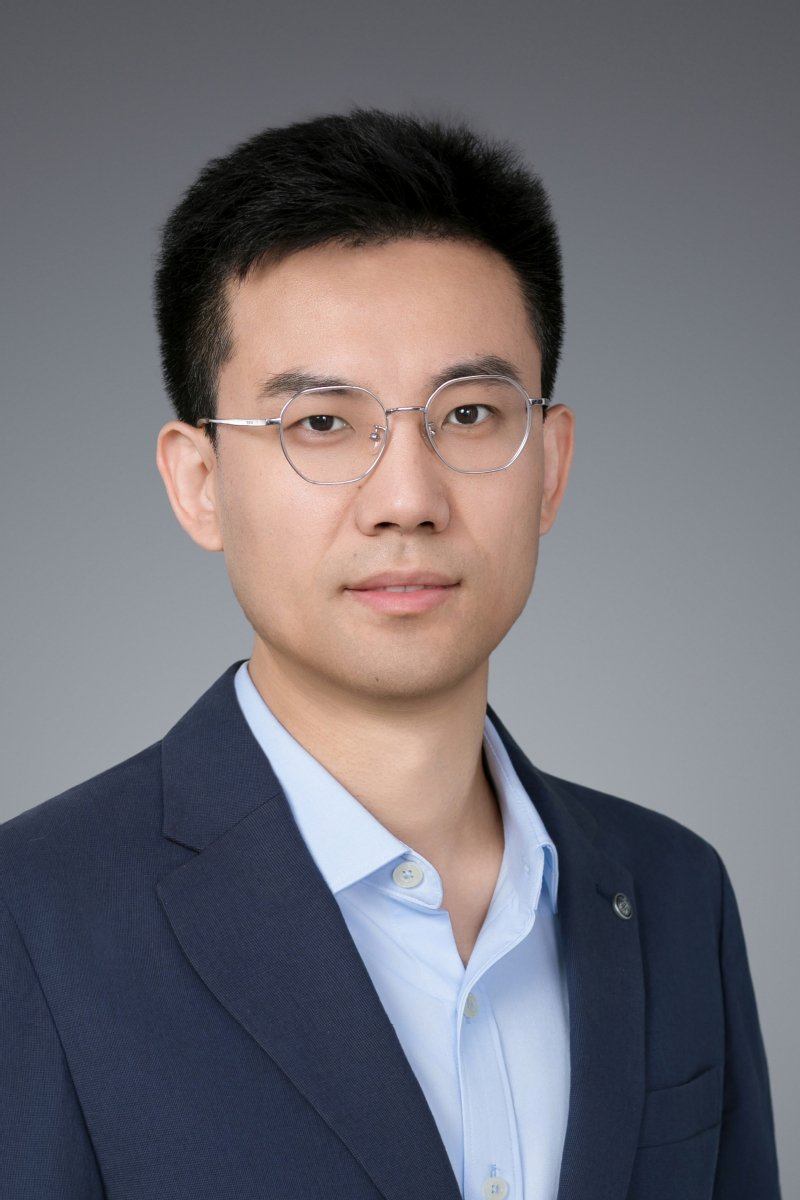
学位:博士
导师情况:博士生导师
研究领域:生殖发育
E-mail:dingdeqiang@tongji.edu.cn
通讯地址:上海市杨浦区四平路1239号,同济大学生命科学与技术学院,200092
个人简介:
2009年毕业于青岛大学,获得生物技术专业学士学位。2014年毕业于北京师范大学,获得细胞生物学专业博士学位,博士期间主要从事端粒酶在肿瘤发生过程中的功能研究。2014年至2019年在美国密歇根州立大学动物科学系进行博士后研究,主要研究方向为哺乳动物雄性生殖细胞发育。2019年12月至2022年2月受聘于同济大学生命科学与技术学院,任特聘研究员。2022年3月至今任同济大学生命科学与技术学院教授。2020年1月至今兼任同济大学附属妇产科医院研究员。2019年入选上海市高层次人才引进计划,2021年获得国家高层次青年人才项目资助。近年来以通讯作者在Developmental Cell、EMBO Journal、Nature Communications、Advanced Science、Nucleic Acids Research、EMBO Reports、Plos Genetics等杂志上发表多篇论文。
研究方向:
1. 雄性生殖细胞发育的调控机制;
2. piRNA的生成机制以及功能;
3. 生殖颗粒的组装机制与生理功能;
4. 相分离蛋白在生理过程以及病理过程中的功能及其调控机制。
研究内容:
PIWI结合RNA(piRNA)是一种长约24-32nt的小非编码RNA,在生殖细胞中特异性表达,在配子发生过程中发挥重要功能。piRNA与PIWI蛋白形成复合物共同行使功能。piRNA的生成方式、生物学功能与另外两种小非编码RNA(miRNA和siRNA)有很大不同。piRNA由前体RNA经过多个步骤的核酸酶切割产生,一条前体RNA可以生成大量不同序列的piRNA。piRNA生成是一个非常复杂的过程,目前已经发现超过20个蛋白参与piRNA生成,这其中包括一系列的核酸外切酶、核酸内切酶、RNA解螺旋酶、RNA甲基转移酶、RNA结合蛋白、分子伴侣、接头蛋白等等。这些蛋白参与piRNA生成的分子机制大部分还很不清楚。
piRNA是一种非常古老的小非编码RNA,存在于绝大多数动物的生殖细胞内,包括线虫、果蝇、斑马鱼、小鼠、人类等物种。piRNA最保守的功能是抑制转座子的活性,维持生殖细胞基因组的稳定性。转座子的活性所导致的基因组不稳定性是生物进化的重要驱动力,但同时会威胁个体生存。生殖细胞负责遗传信息的世代传递,其基因组的稳定性对个体和物种维持至关重要。piRNA的主要功能就是在生殖细胞内抑制转座子的活性。piRNA通过多种机制抑制转座子活性,包括DNA甲基化、组蛋白甲基化、mRNA降解等。除了抑制转座子,piRNA在哺乳动物中还存在多种生物学功能,例如调控精子发生关键基因的mRNA降解以及翻译激活等等。近期有研究表明piRNA在早期胚胎发育过程中也存在重要功能。这些科学问题都有待进一步研究。
生殖颗粒(germ granule)是特异性存在于动物生殖细胞的细胞质中的无膜细胞器(membraneless organelles, MLOs),参与多种RNA相关的代谢过程,包括小RNA加工、mRNA储存、mRNA翻译和降解等。在果蝇和线虫中,生殖颗粒参与生殖细胞性别决定;而在哺乳动物中,生殖颗粒一般出现在性别决定之后,在配子发生过程中发挥重要功能。在哺乳动物雄性生殖细胞中存在两类主要的生殖颗粒:一种是存在于精原细胞以及精母细胞中的intermitochondrial cement(IMC),另一种是主要存在于圆形精子细胞中的chromatoid body(CB)。IMC的组分中包含大量与piRNA生成有关的蛋白,因此IMC被认为是piRNA加工的主要场所。CB中包含大量成熟的piRNA以及PIWI蛋白,被认为是piRNA发挥功能的场所。CB中还包含大量其他与RNA代谢有关的组分。IMC以及CB在生殖细胞中的组装机制以及生物学功能还有待进一步研究。
相分离(phase separation)指的是生物大分子在细胞内聚集形成的一种特殊状态。具有相分离活性的蛋白通过多价相互作用,形成大分子凝聚物,是细胞内无膜颗粒结构组装的重要机制。细胞内的相分离过程在细胞信号转导、细胞周期调控、RNA转录、代谢调控以及染色质结构调控等关键生命活动中扮演着重要角色。越来越多的证据表明相分离与生殖颗粒的组装密切相关,相分离过程在生殖细胞发育过程中起到至关重要的作用。
本实验室采用分子、生化、遗传、生物信息学等手段,利用包括基因敲除小鼠,条件性敲除小鼠、定点突变小鼠在内的多种动物模型,研究雄性生殖细胞发育的调控机制、piRNA的生成机制以及生物学功能、生殖颗粒的形成与功能、相分离蛋白在生殖细胞发育中的生物学功能等关键科学问题。同时,我们也关注相分离蛋白在其他生理过程和病理过程中的调控作用以及分子机制。
代表文献(*:第一作者,#:通讯作者):
Yu W.*, Gao J.*, Shang G., Chen C., Zhao T., Wang K., Li M. #, Jiang N. #, Ding D.# (2026).TDRD5 facilitates piRNA biogenesis and male fertility through phase separation. EMBO Reportsdoi.org/10.1038/s44319-026-00890-6
Gao J.*, Chen C.M.*, Shang G., Yu W., Zhao T., Zhang Y., Chen C., and Ding D.# (2025).PIWI proteins tether the piRNA biogenesis machinery to mitochondria during mammalian spermatogenesis. EMBO Journal44 (22), 6397-6424
Jing J.*, Yang F.*, Wang K.*, Cui M., Kong N., Wang S., Kong F., Zhao D., Ji J., Tang L., Cong Y.S., Ding D.#, and Chen K.# (2025) UFMylation of NLRP3 prevents its autophagic degradation and facilitates inflammasome activation. Advanced Science 12 (15), 2406786
Wei C.*, Yan X., Mann J.M., Geng R., Wang Q., Xie H., Demireva E.Y., Sun L., Ding D.#, and Chen, C.# (2024). PNLDC1 catalysis and postnatal germline function are required for piRNA trimming, LINE1 silencing, and spermatogenesis in mice. PLoS Genetics 20(9), e1011429.
Xie X., Chen X., Sun L., Yu W., Lv Z., Tian S., Yao X., Wang C., Wang F.#, Ding D.#, Chen J.#, and Liu J.# (2024)PARN maintains RNA stability to regulate insulin maturation and GSIS in pancreatic β cells. Advanced Science11 (42), 2407774
Gao J.*, Jing J.*, Shang G.*, Chen C.M., Duan M., Yu W., Wang K., Luo J., Song M, Chen K, Chen C, Zhang T., and Ding D.# (2024).TDRD1 phase separation drives intermitochondrial cement assembly to promote piRNA biogenesis and fertility. Developmental Cell59, 2704–2718.
Wei H.*, Gao J.*, Lin D.*, Geng R.*, Liao J., Huang T., Shang G., Jing J., Fan Z., Pan D., Yin Z., Li T., Liu X., Chen C.,Li J., Wang X.#, Ding D.#, and Liu M.F.# (2024). piRNA loading triggers MIWI translocation from the intermitochondrial cementto chromatoid body during mouse spermatogenesis. Nature Communications 15, 2343.
Wei C.*, Jing J.*, Yan X., Mann J.M., Geng R., Xie H., Demireva E.Y., Hess R.A., Ding D.#, and Chen, C.# (2023). MIWI N-terminal RG motif promotes efficient pachytene piRNA production and spermatogenesis independent of LINE1 transposon silencing. PLoS Genetics 19(11), e1011031.
Liu J.*, Hermo L.*, Ding D.*, Wei C., Mann J.M., Yan X., Melnick A.F., Wu Y., Withrow A., Cibelli J., Hess R.A., and Chen C.# (2023). SYPL1 defines a vesicular pathway essential for sperm cytoplasmic droplet formation and male fertility. Nature Communications 14, 5113.
Ding D.*#, Wei C., Dong K., Liu J., Stanton A., Xu C., Min J., Hu J., and Chen C.# (2020). LOTUS domain is a novel class of G-rich and G-quadruplex RNA binding domain. Nucleic Acids Research 48, 9262-9272.
Ding D.*, Liu J.*, Dong K., Melnick A.F., Latham K.E., and Chen C.# (2019). Mitochondrial membrane-based initial separation of MIWI and MILI functions during pachytene piRNA biogenesis. Nucleic Acids Research 47, 2594-2608.
Ding D.*, Liu, J. Midic, U., Wu Y., Dong K., Melnick A., Latham K.E., and Chen C.# (2018). TDRD5 binds piRNA precursors and selectively enhances pachytene piRNA processing in mice. Nature Communications 9, 127.
Ding D.*, Liu J.*, Dong K.*, Midic U., Hess R.A., Xie H., Demireva E.Y., and Chen C.# (2017). PNLDC1 is essential for piRNA 3' end trimming and transposon silencing during spermatogenesis in mice. Nature Communications 8, 819.
Liu N.*, Ding D.*, Hao W., Yang F., Wu X., Wang M., Xu X., Ju Z., Liu J.P., Song Z., Shay J.W., Guo Y., Cong Y.S.# (2016). hTERT promotes tumor angiogenesis by activating VEGF via interactions with the Sp1 transcription factor. Nucleic Acids Research 44, 8693-8703.
Ding D.*, Xi P.*, Zhou J., Wang M., and Cong Y.S.# (2013). Human telomerase reverse transcriptase regulates MMP expression independently of telomerase activity via NF-kappaB-dependent transcription. FASEB Journal 27, 4375-4383.
本课题组常年招聘博士生和硕士生,欢迎有志于生命科学领域的研究生和本科生报考和实习,同时欢迎具有生物医学相关研究经历的副研究员、助理研究员、博士后加盟。
Copyright© 2011-2015 生命科学与技术学院, All rights reserved
地址:上海市四平路1239号 电话:021-65981041 传真:65981041
